


Type 2 diabetes is characterized by insulin resistance and is among the chronic conditions most influenced by nutrition and lifestyle changes. With proper nutrition, HbA1c can decline substantially, and early-stage diabetes may even enter remission.
Glycemic Index and Glycemic Load
Glycemic index (GI) shows how rapidly a food raises blood glucose. However, GI alone is not enough; glycemic load (GL), which also accounts for portion size, is more meaningful. Whole grains, legumes, vegetables, and most fruits have low to moderate GI values. White bread, white rice, potatoes, and sugary drinks are generally high GI.
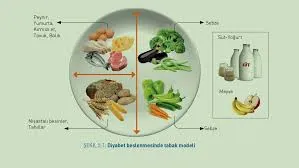
Recommended Plate Model in Diabetes
- 1/2 plate: non-starchy vegetables (broccoli, spinach, salad greens, zucchini)
- 1/4 plate: lean protein (chicken, fish, legumes, egg)
- 1/4 plate: quality carbohydrates (quinoa, bulgur, whole wheat pasta)
- Healthy fats: olive oil or avocado
Does Meal Sequence Affect Blood Glucose?
Yes. Research shows that eating vegetables and protein before carbohydrates can reduce post-meal glucose peaks by around 30-40%. This simple behavior can have meaningful effects on overall glycemic control.
Intermittent Fasting and Diabetes
Intermittent fasting protocols such as 16:8 or 5:2 may improve insulin sensitivity in some individuals with type 2 diabetes. However, those using insulin or sulfonylureas need physician approval due to hypoglycemia risk. A personalized approach is critical.